- Educated – Tara Westover, 2018. I had no idea quite how harrowing this would be. So interesting that the family essential oil empire, described near the end, is still going strong.
- Quit Like a Millionaire: No Gimmicks, Luck, or Trust Fund Required – Kristy Shen and Bryce Leung, 2019 – I’m sort of a FIRE follower and gobble up books like this. On the quick-read/fun side – I don’t think I learned anything new but I like Kristy’s attitude.
- The Art of Frugal Hedonism: A Guide to Spending Less While Enjoying Everything More – Annie Raser-Rowland with Adam Grubb, 2017
- Salt: A World History – Mark Kurlansky, 2002
- Beatlebone – Kevin Barry, 2015
- Moll Flanders – Daniel Defoe, 1722
The Art of Frugal Hedonism: A Guide to Spending Less While Enjoying Everything More – Annie Raser-Rowland with Adam Grubb, 2017
I think I heard about this from the same source as Quit Like a Millionaire, but this one I loved. I borrowed it from the library but will put a copy on my to-buy list. There’s a nice website and ooh, an interview I plan on watching!
The book is similar in tone and optimism to my favorite financial blogger, Mr. Money Mustache, but even more focused on relishing day-to-day pleasures and the natural world. Some of the chapter titles capture this attitude: “Recalibrate your senses,” “Enjoy excess” (they throw a banana party when they have a glut of them), “Revel in the good brain chemistry of resourcefulness,” “Indulge your curiosity,” “It won’t be dull. We promise,” “Put on your favorite power anthem, and be the zeitgeist,” “Free up your frivolity,” “Sup at the cultural buffet,” and the last one, “Look up, think about constellations. Look down, think about magma.”
It’s Australian, so I learned the word “jaffle” (a toasted sandwich – now I want one of the cool fluted grills).
In the “Don’t be a sucker” chapter, about resisting advertising:
Be more content. Okay, easier said that done, but as author Douglas Rushkoff writes in his book Coercion, “the more fun you’re having in life, the more satisfied your are with yourself, the harder a target you are to reach.” You may have observed that people with an air of contentment with life, a mind fascinated by ideas, and strong connections with other people and the natural world are less susceptible to advertising. So make like a content person, and ignore the billboard! You are above such piffle!
In the frivolity chapter, contrasted to light-hearted spending:
Living light-heartedly is an altogether different beast. It involves being a bit philosophical about bad things that happen, so that they don’t dominate your mind or outlook. Or retaining the ability to take delight in fleeting moments. Or recognizing that being frivolous, spontaneous or playful with other humans and within your own head is a totally free present you can give to yourself and the people around you as often as you like. This stuff is the real assertion of freedom from the drabber elements of daily life: don’t get it confused with frivolous spending.
Beatlebone – Kevin Barry, 2015
Irish Writer’s Group selection. I mostly hated it! Using a real person, especially John Lennon, just feels lazy, even though it’s based on an actual incident in Lennon’s life. Constant references to external things (“Wuthering Heights” by Kate Bush) w/o specifically identifying them, which usually bugs me. Example re Gerard Manley Hopkins: “I caught this morning morning’s fucking minion—the one where he sees a bird and goes all swoony coz he loves fucking nature.” Weird interspersion of first-person as-himself metafiction as he researches the book in New York and Ireland – I would have liked just that, as an essay, much better. In that section he says amusingly: “I would return to report my findings in a mature, honed prose, as clear as glass: this from a man who had never knowingly underfed an adjective.”
I looked up:
- bevvied: drunk
- boreen: narrow country lane
- Liverpool time slip reports (note I do not believe in anything paranormal but find it interesting)
Quotes:
- “Zola wrote that the road from Lourdes is littered with crutches but not a single wooden leg”
- Depressed/unresponsive father (of the driver) “would look back at me, with the eyes like stones inside his head”
- “He read once that the hare augurs darkly in the Irish mythology. From what he can remember there is fuck all that augurs brightly in the Irish mythology.”
Cornelius (the driver) asks what’s on his mind:
Love, blood, fate, death, sex, the void, mother, father, cunt and prick—these are the things on his mind.
Also—
How many more times are they going to ask me to come on The fucking Muppet Show?
I do like that italicized tmesis there! And the references to Radio Luxembourg (this is set in 1978 so right around when I was listening in my bedroom in Paris).
The Fortunes and Misfortunes of the Famous Moll Flanders, Etc. – Daniel Defoe, 1722
Forbes Great Books selection. What a fascinating book – we had a great discussion, and it’s one of the most memorable titles we’ve read.
Defoe starts by saying that “there is not a wicked action in any part of it, but is first and last rendered unhappy and unfortunate” but what comes through is the focus on money, on survival, whatever it takes. “I am giving an account of what was, not of what ought or ought not to be.” “The vice came in always at the door of necessity, not at the door of inclination.” Moll’s self-interest makes her emotional responses of guilt wear off quickly. Useful warnings to the reader against being too trusting. It also emphasizes how fabric was so valuable – a bundle of lace was worth 300 pounds in money of the time!
- “all I understood by being a gentlewoman was to be able to work for myself, and get enough to keep me without that terrible bugbear going to service, whereas they meant to live great, rich and high, and I know not what”
- Old governess comforting her: “to sink under the Weight, was but to encrease the Weight”
- Transportation: “we should live as new People in a new World”
it was requisite to a whore to be handsome, well-shaped, have a good mien and a graceful behaviour; but that for a wife, no deformity would shock the fancy, no ill qualities the judgment; the money was the thing; the portion was neither crooked nor monstrous, but the money was always agreeable, whatever the wife was.
I’d love to find out more about this: “A Garbling Office has been established in London in the fifteenth century to inspect several Sorts of Goods, more particularly subject to Frauds, Mixtures and false Package, in order to cleanse them, and make them Merchantable)” (Review, iv 635, 17 Feb 1708)
Salt: A World History – Mark Kurlansky, 2002
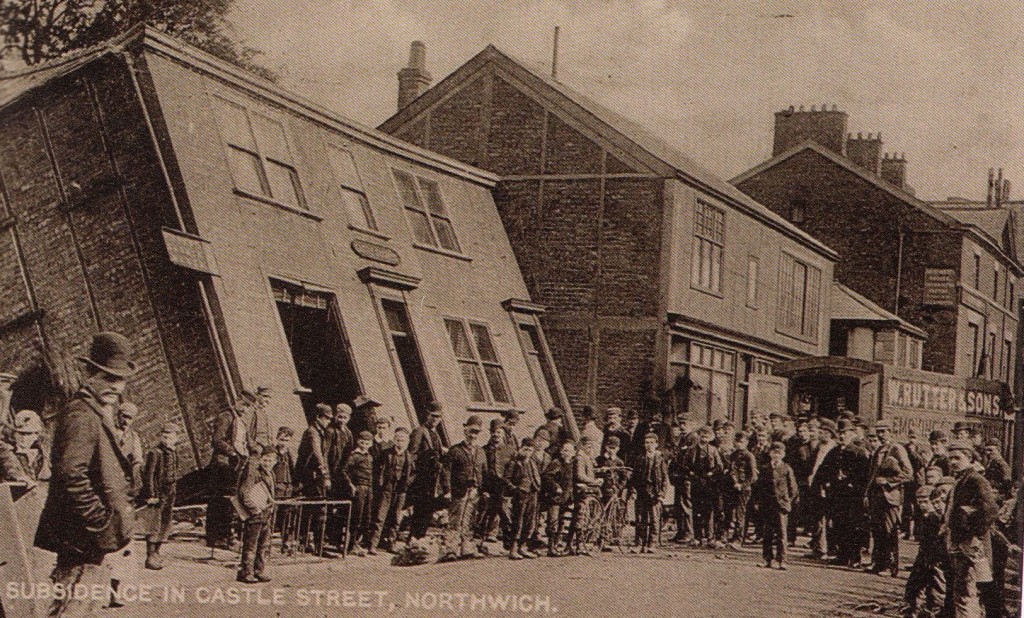
Read for Nature and Environment. It started with a great intro about a chunk of salt from Cardona and its strange behavior on the author’s windowsill. I learned a ton of fascinating things, but it was overall kind of a disappointing hodgepodge. Kurlansky is sometimes confusing, and a few things I looked up turned out to be wrong. He claims that “Ragoût de berniques, literally a stew made of nothing, was in fact made of potatoes, carrots, and onions” but actually it looks like berniques are limpets. He describes Nehemiah Grew as “a British plant physiologist who is credited with being the first human ever to witness and document plants having sex” – a bizarre way to describe proposing a theory of sexual reproduction in plants. The photo of salt subsidence linked below was captioned “in Castle, Cheshire” whereas it’s Castle STREET in Norwich, Cheshire. I was a little shocked that such a thorough researcher would describe sardines as belonging to the Clupeidea family – sardines are not a species but rather any of a set of small fish (i.e. all Clupeidea might be sardines, but not all sardines are Clupeidea). I’m nitpicking, but very glad we read it.
I looked up or learned:
- Kahm yeast
- Oxalme (vinegar brine sauce)
- In Sichuan province, natural gas was being used to boil off brine in AD 200
- Small onions were placed in the eye sockets of the mummy of Ramses the IV
- Tarim mummies
- Cod preserves so well because it has almost no fat in its flesh
- I knew the gabelle was something the French hated that led to the revolution, but I thought it was a work requisition. I didn’t realize it was a tax on salt – also “sel du devoir,” forced purchase of 7 kg of salt per year per person over the age of 8, but you couldn’t use it to make salted products or you’d be charged with “faux saunage,” salt fraud.
- Herring light and/or herring lightning – interesting phenomena around their huge schools
- The Polish national poem, Pan Tadeusz, says “sliced saukraut… just walks into the mouth” (re bigos, the equivalent of choucroute garni)
- “Anglo Saxons called a saltworks a wich, and any place in England where the name ends in ‘wich’ at one time produced salt”
- An incredibly detailed method for curing salmon specifies the barrel “is to be stamped or leaped upon by a youth of about 15 years old or thereabouts”
- Bell metal: bronze with a high tin percentage
- Saltworks near Syracuse had watchtowers with bells to be rung when rain threatened so the workers and their families, who lived nearby, could rush over and pull covers over the vats. “Entire families ran to the saltworks, competing with each other to be first to cover a complete row. Winning families got small cash prizes.”
- Small amounts of nitrates are still allowed for the “oddly unquestioned goal of making ham reddish” (apparently the color was a side effect of the preserving process)
- Early chemistry said “sugar is a salt”
- Birdseye discovered that flash-freezing preserved food better “because of a principle every salt maker knew: Rapid crystallization creates small crystals, and slow crystallization produces large ones.”
- The history of subsidence in Cheshire (great photo from the book) led me to learn about “bastard brine,” which I can’t believe Kurlansky didn’t include!
- The British tried to prevent salt smuggling in India in the 1840s by creating an impenetrable thorn Great Hedge hundreds of miles long
- The Dead Sea was named Asphalt Lake by the Romans and blocks of asphalt can be found floating in it
- The old crest of Turks and Caicos sometimes has a little door drawn on one of the salt piles because “the English designer assumed the little white domes were igloos”
- This is probably true of mines in general: “When equipment is no longer useful, it is not considered cost effective to take it apart and bring it back up, so the mine leaves a trail of abandoned equipment, a junkyard on the side of some of the wide shafts.”
- Liberty Style was the Italian Art Nouveau
- “After thousands of years of struggle to make salt white and of even grain, affluent people will now pay more for salts that are odd shapes and colors”
Acids search for an electron that they lack, and bases try to shed an extra one. Together they make a well-balanced compound, a salt. …
It turned out that salt was a microcosm for one of the oldest concepts of nature and the order of the universe. From the fourth-century-B.C. Chinese belief in the forces of yin and yang, to most of the world’s religions, to modern science, to the basic principles of cooking, there has always been a belief that two opposing forces find completion—one recieving a missing part and the other shedding an extra one. A salt is a small but perfect thing.
As brine boiling was fading, Sichuan engineers found a new use for the natural gas at the wells. Buses were built with giant gray bladders on the roofs, filled with the local natural gas. They started out on their routes with the huge rectangular bladder on top almost as big as the bus. The big bladder swayed and jiggled like Jell-O as the bus rounded corners, and then it gradually deflated, the gray bag sagging from the roof, as the gas was used up. Locals call the buses da qi bao, which means “big bag of gas.” The buses need frequent refueling.
It’s true! Here’s a great photo, and a very informative article on the history of such transport in Low Tech magazine.